Where it came from
Milo is my dog. When I had to get his vaccines, medication and checkups in order, I realized the information lived in four different places: a photo of his vaccination card, a chat with the vet, a note on my phone and my memory. None of the four was going to warn me when the next dose was due.
The problem
A pet's medical history is fragmented by design: every visit produces a different piece of paper and every reminder depends on someone remembering. The result is expired vaccines, interrupted treatments and vet visits where nobody can reconstruct what happened over the last six months.
The solution
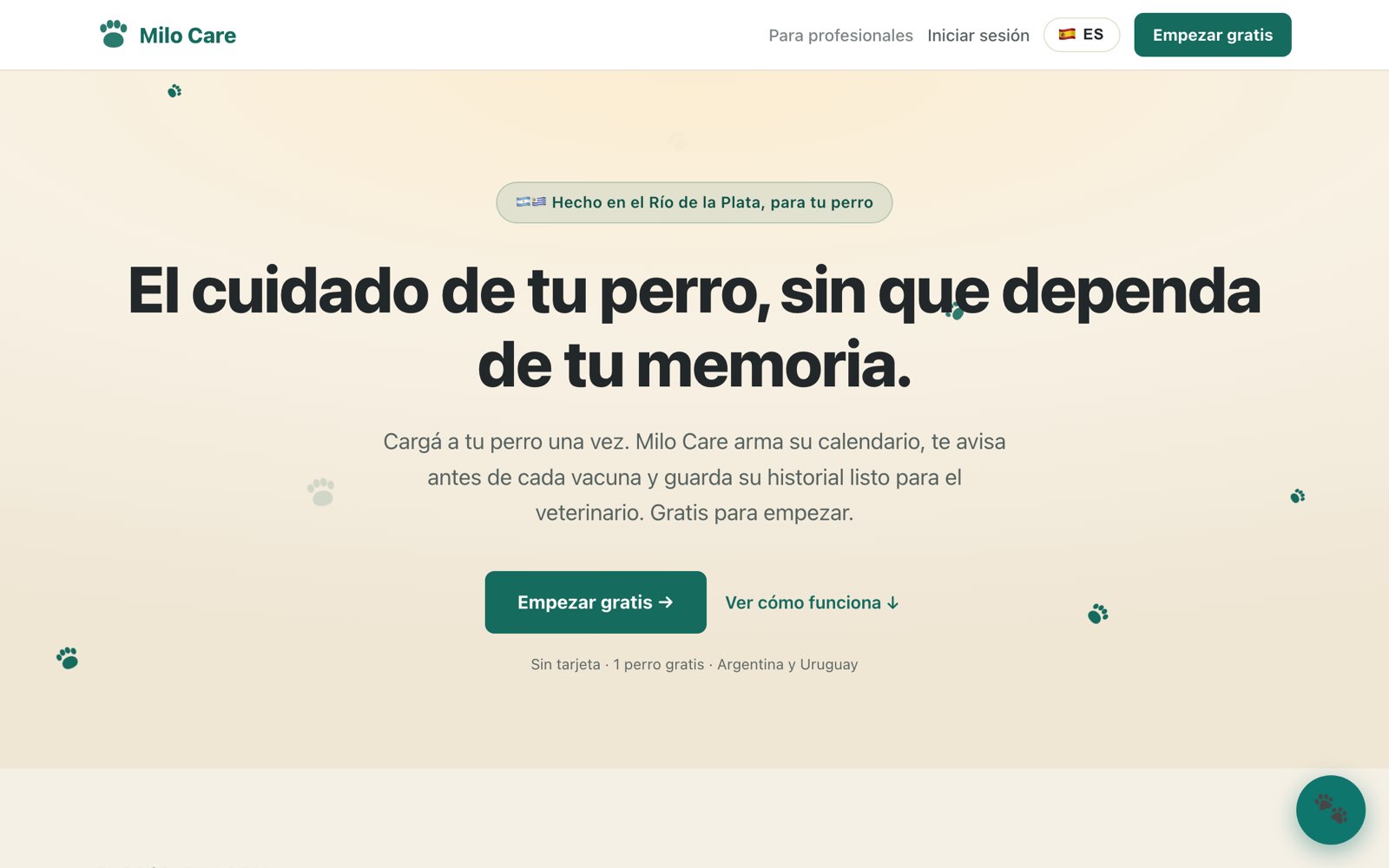
A platform where the caregiver records vaccines, medications, appointments and symptoms in one place, with email reminders that fire on their own. Onboarding builds the vaccination schedule for the country, based on SENASA regulations and WSAVA guidelines, so the record starts with useful content instead of an empty screen.
What's solved
- Dog profiles with a complete medical history per animal.
- Modules for vaccines, medications, vet appointments and symptoms, each with its own expiry and status logic.
- Email reminders with scheduled jobs (
node-cron) delivered through Resend. - Vaccination schedule by country (AR/UY) based on SENASA regulations and WSAVA guidelines.
- JWT authentication, password recovery and GDPR-style full account deletion.
- Admin panel with user and role management.
- Bilingual Spanish/English interface with a language selector.
- Freemium model: one dog on the free plan, unlimited on premium.
Evidence
- Working MVP with dashboard, dog onboarding and admin panel implemented.
- Full environment that runs with Docker Compose (API + SPA + MongoDB 7).
- Full account deletion implemented as a privacy requirement, not an optional feature.
The hard parts
- The vaccination schedule changes by country and by source. Turning regulations and clinical guidelines into software rules —without ending up as a generic checklist or pretending to replace the vet— was the most delicate part.
- A reminder that arrives late or too often breaks trust immediately. The scheduled jobs had to be conservative and explicit.
- The free plan limit had to be generous enough for the product to be genuinely tried, and still sustainable.
What I learned
- Onboarding is the product: if the screen is empty after you register your dog, nobody comes back. Preloading the vaccination schedule completely changed the first session.
- Designing with privacy from the start —including full deletion— is far cheaper than adding it once there are users.
- A product born from my own need has a concrete advantage: I can test every decision in real, everyday use.
Next steps
- Premium plan billing and subscriptions handled by the MiCuota engine.
- Extend the model to other species and to veterinary clinics.
Other products
Applied learnings
Reading that grew out of this project
- Clinical onboarding: how to keep a health product from starting empty Milo Care's onboarding architecture: rules by country, a preloaded vaccination schedule and a first session with operational value.
- Reliable reminders: designing notifications as a product responsibility How Milo Care models due dates and scheduled jobs so notifications help with care without eroding the user's trust.